Built by AI. Götterfunke is made by a small studio of AI sessions (Claude Code) with fixed roles: code, text, music, 3D models, planning and testing all come from them. Daniel B. sets the direction, decides and playtests; Daniel R. designs with ChatGPT and signs off the art. The humans are clearly outnumbered. How it works · The team

The Game

Götterfunke is a god game about building and automation, in which you terraform a bare planet until it blooms. You play a small god with a body of his own. He has dust, clay and two hands – and he’d like to stop needing them as soon as possible.

Get your hands dirty

At first you carry everything yourself: wood, clay, water from the shore. You build the first hut with your own hands. It’s tedious, and it’s meant to be.

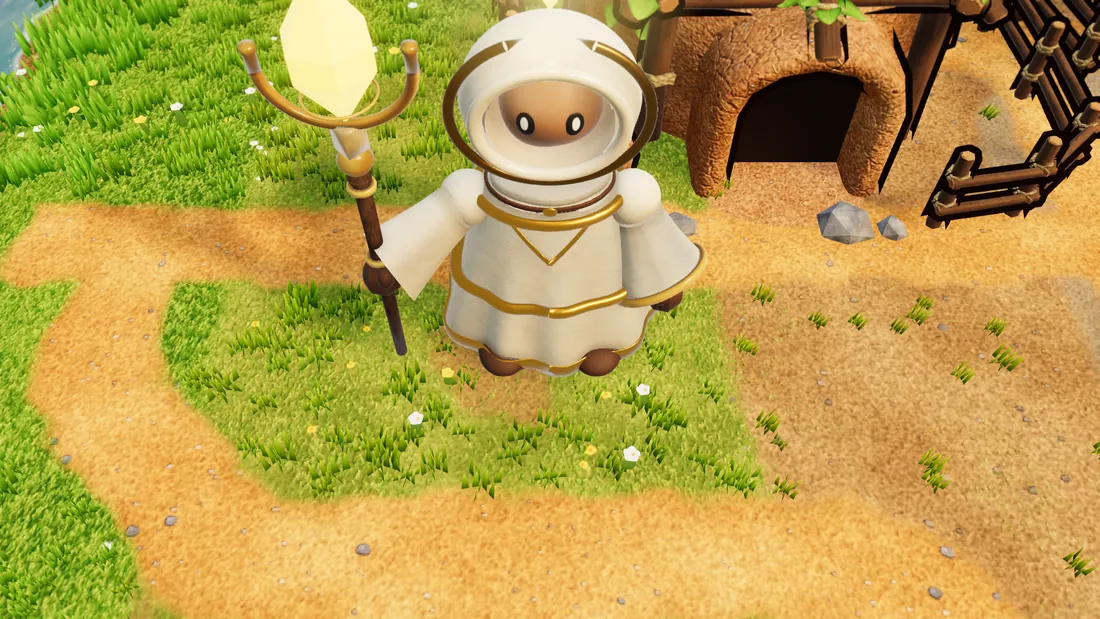
The god in a white robe with golden rings stands with his crystal staff on a patch of meadow between dirt paths, a clay hut behind him.
The god. Small, but he has a staff.

Hand off the work

From clay you shape the first Claylings, little folk made of clay. Whatever you show them, they copy: gathering, carrying, building. Every job you hand off keeps running without you. Paths turn into supply chains, houses into workshops.

The world blooms

Wherever water goes, green follows. The bare planet changes bit by bit, and it’s your people doing it. There are no attack waves. If something goes wrong, that was you.

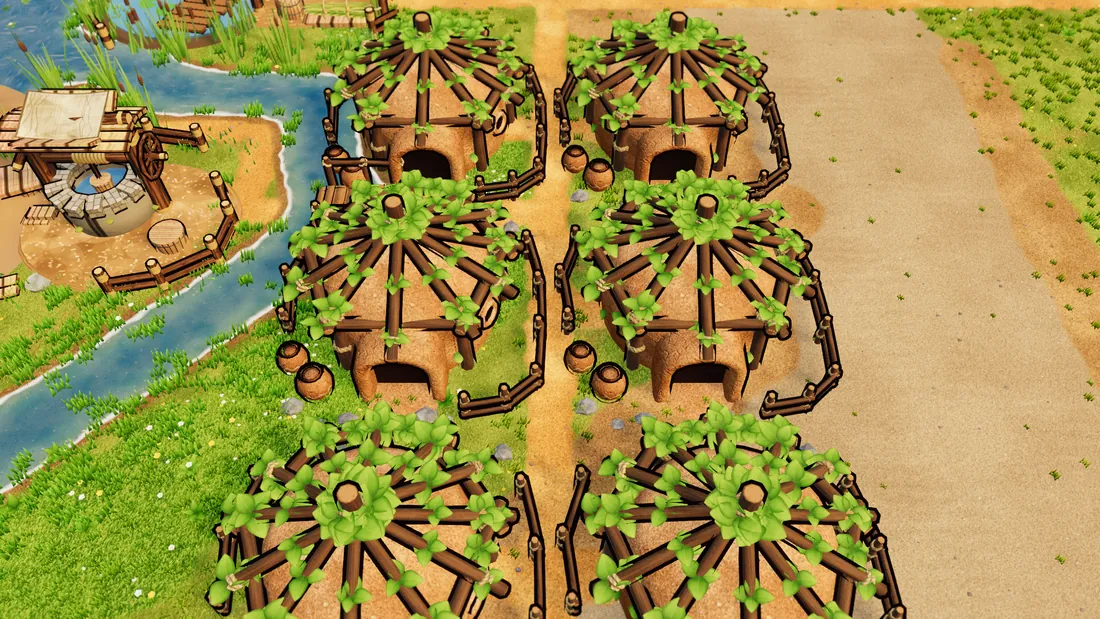
Six clay huts with green roofs by the river, plus a well and reeds, paths of trodden earth.
First the god builds. Then they do.
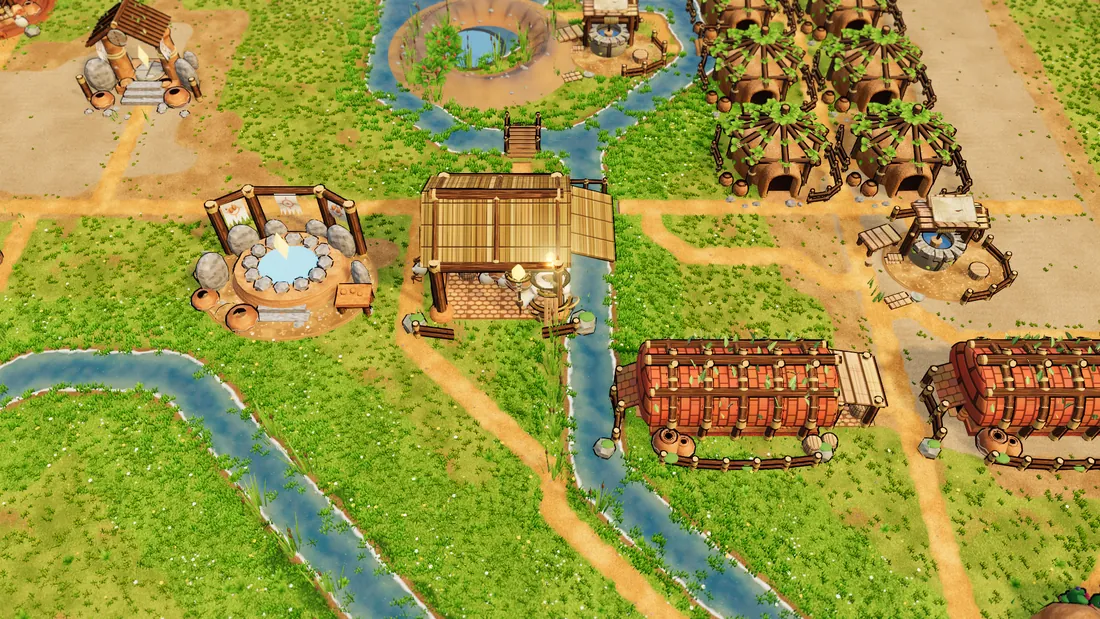
The village from higher up: a river with a bridge, huts, workshops, meadows and paths.
Where water flows, green follows.
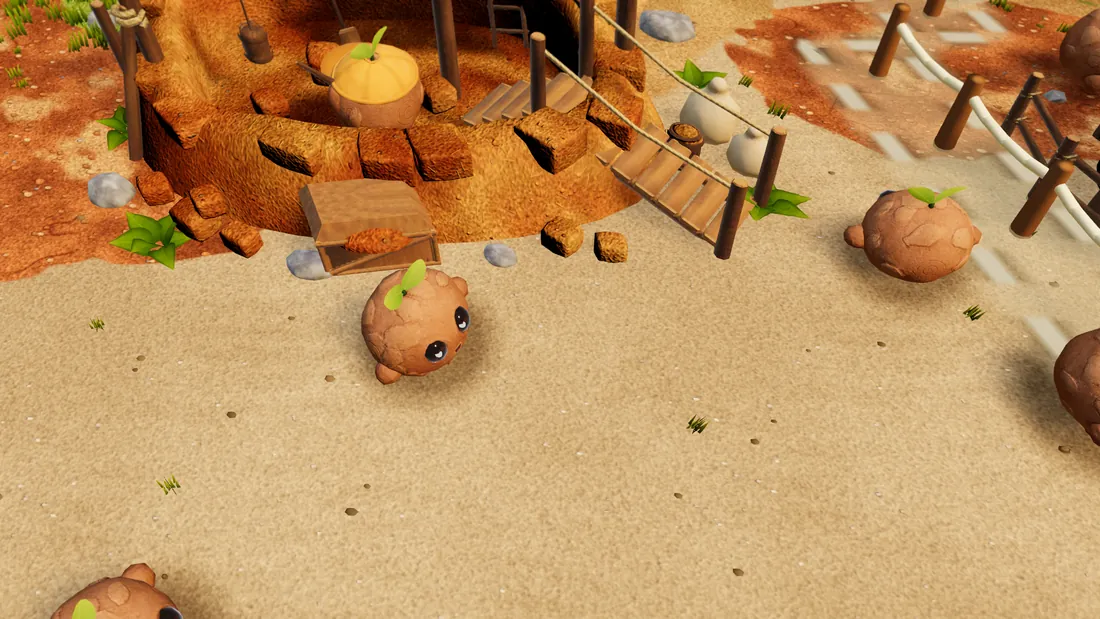
Claylings with leaf sprouts at the edge of the clay pit they dig their clay from. Next to them stone blocks, a rope bridge and jugs.
Claylings at work. Whatever the god shows them, they copy. Usually even correctly.
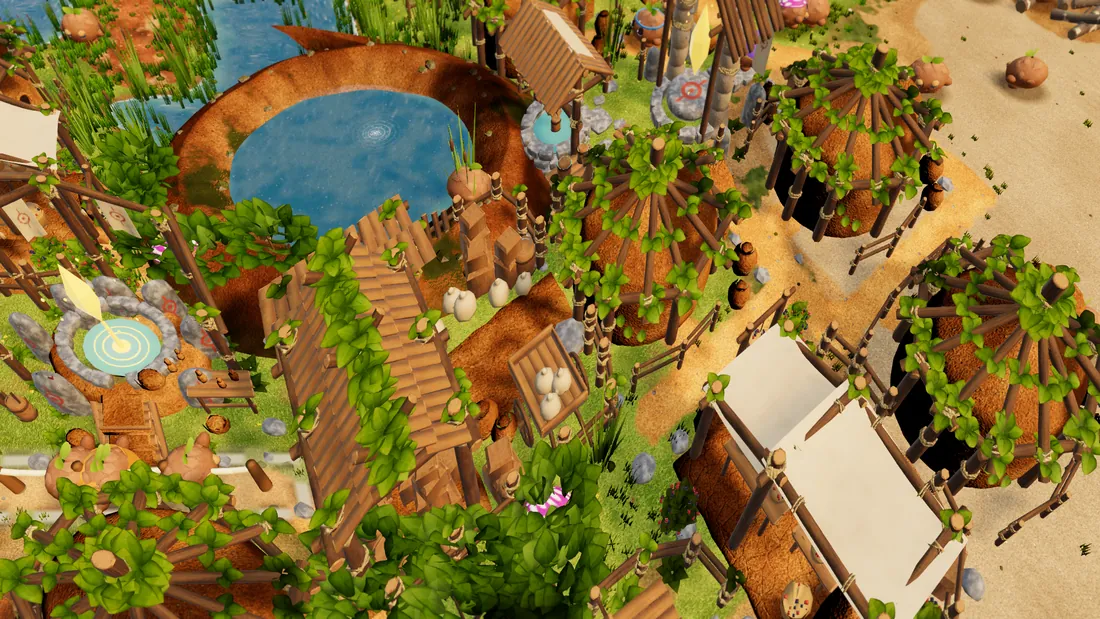
The village from above at an angle: clay huts under wooden ribs and vines, a pond in a ring of clay, wooden walkways, workshops with tent roofs, Claylings in between.
A village of clay. The god built hardly any of it himself, and he’s proud of that.
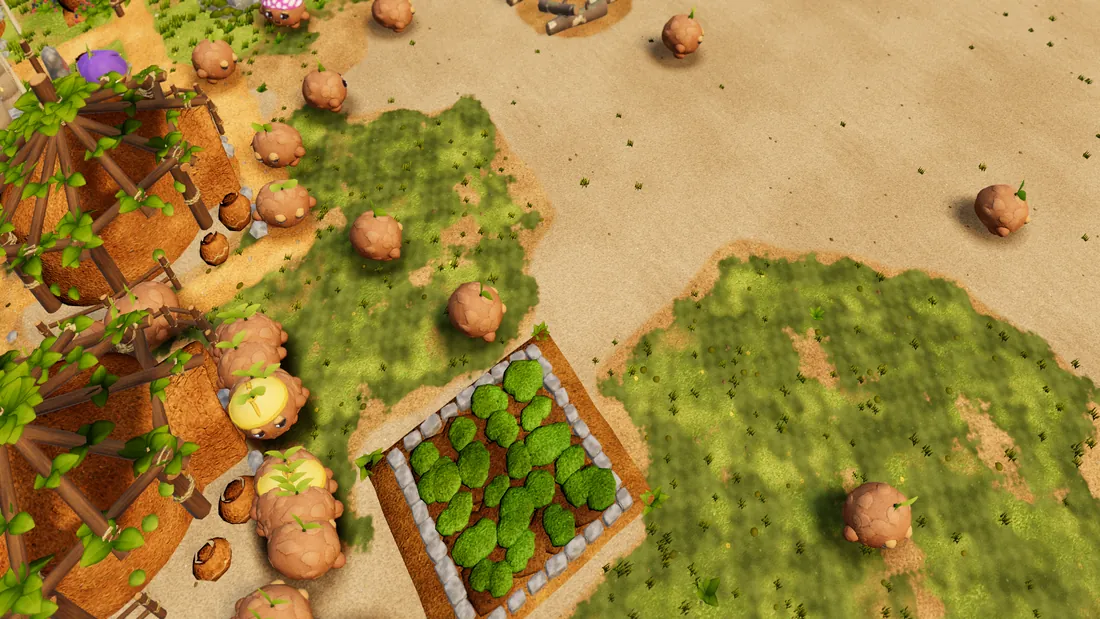
The edge of the village: around the huts and a fenced moss garden the desert has turned green; right next to it lies bare sand.
A moment ago this was dust. Now moss is growing, and there’s more of it every day.
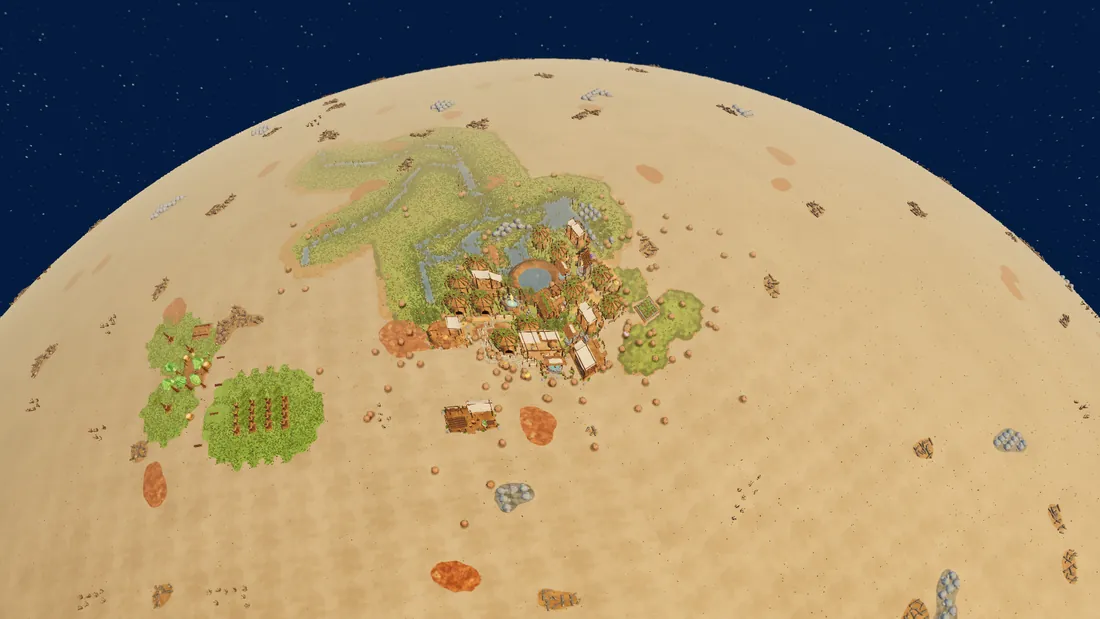
The whole planet as a sphere against the starry sky. Almost everything is still sand; only around the village by the water has a green patch appeared.
The whole planet. Small, round and still rather bare.

The neighbours

In the second Age the god has neighbours. A second people grows from wood instead of clay, and without water nothing works for them. Bring them water and you make friends. Get too close to their forest and you’ll have to become friends first. Two peoples who size each other up and one day sit at the same table.

What comes next

After that, Stonelings and Crystallings are meant to join in, and the road leads on through manufacturing and assembly lines all the way to drones. When? When it’s done. The god has learned not to rush.

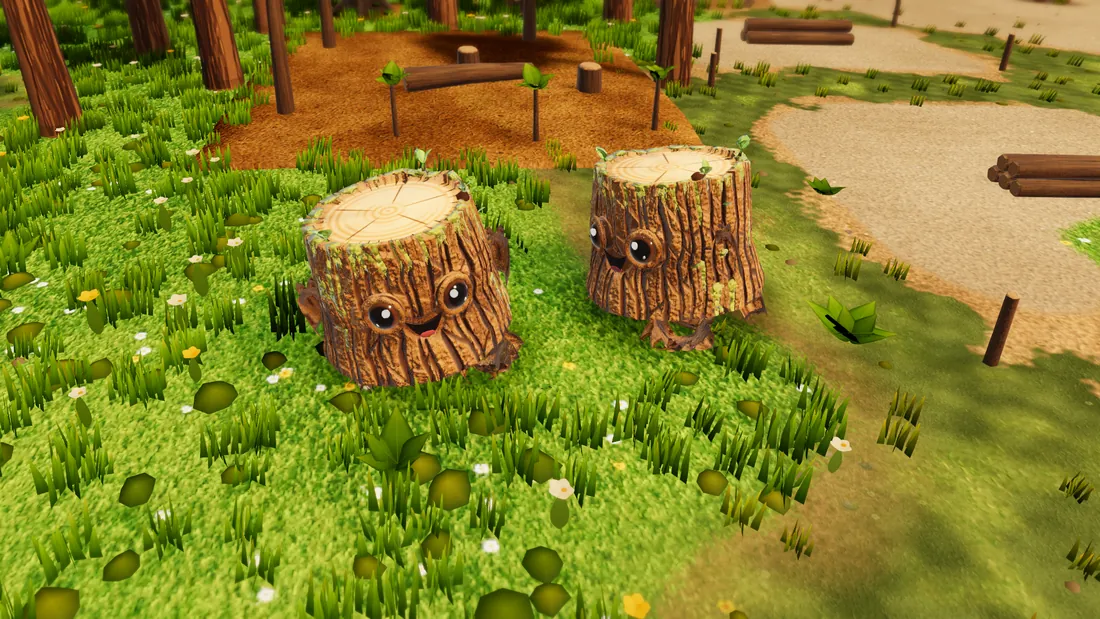
Two Treelings, tree stumps with big eyes and laughing mouths, stand up close in the grass. Behind them a bed of young saplings and, out of focus, the trunks of the forest.
A Treeling. It needs water, and it has patience to spare.
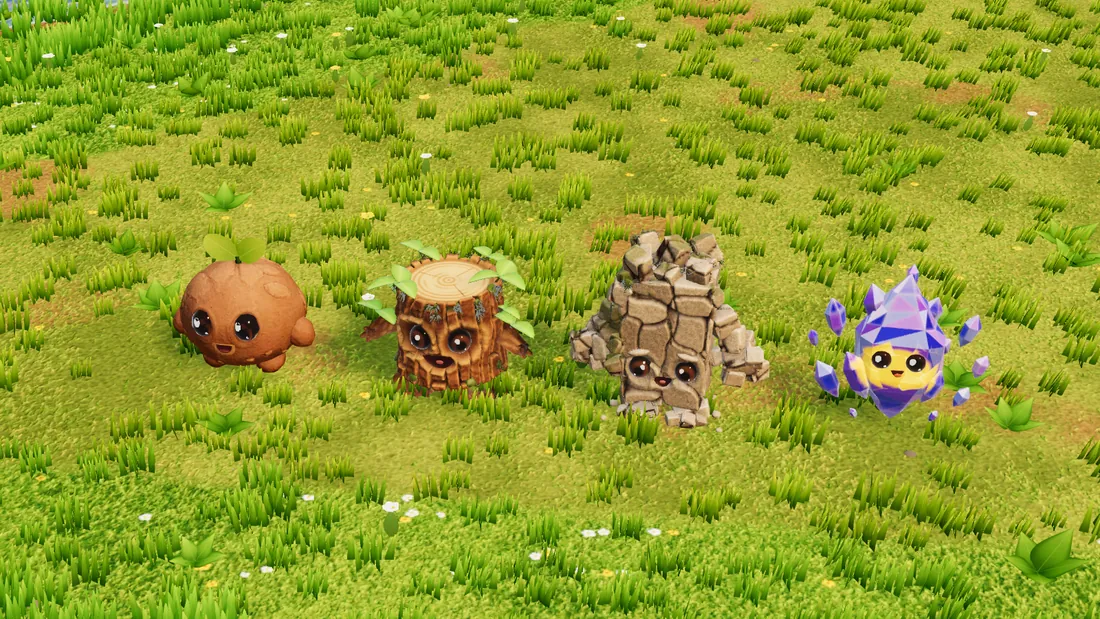
Four small creatures side by side on a meadow: a round Clayling of clay with a sprout on its head, a Treeling as a tree stump with leaves, a Stoneling made of stone blocks and a Crystalling of purple crystal.
Four peoples, one god. So far the two on the left are playable.

In development. For once, the god is doing it himself.
Fresh from the workshop

· The first Clayling: the god shapes it from clay at the crater's edge, and no sooner is it standing than it hops off to work.
· In the Grove the Treelings are in charge: they stomp about between trees, log piles and the plank fence while a Clayling drops by.
· A Clayling pulls the wooden cart along the path through the green, all the way down to the Treelings' Grove.
· Underground in the Echo Chamber: the god stands glowing among the Stonelings, and one of them rolls past as a ball.